
In the digital age, online censorship poses a significant threat to internet users worldwide. Virtual Private Networks, or VPNs, emerge as powerful tools to combat this issue. They create a secure tunnel for your data, masking your IP address and encrypting your online activities. This way, governments or organizations cannot easily block access to websites or monitor your behavior. VPNs are essential for journalists, activists, and everyday users seeking unrestricted information. With rising global restrictions, understanding VPNs becomes crucial for maintaining online freedom.
By using a VPN, individuals can evade censorship more effectively than ever before. For instance, it routes your traffic through servers in different countries, allowing you to access blocked content seamlessly.

How VPNs Bypass Censorship Mechanisms
VPNs employ advanced encryption to shield users from prying eyes. They reroute internet traffic via secure servers, effectively hiding your real location. This technique thwarts firewalls and content filters imposed by authorities. Moreover, VPNs prevent deep packet inspection, a common censorship tool. Users in restricted regions, such as China or Iran, rely on this to access global news. The process involves selecting a server in a free country and connecting instantly. However, not all VPNs perform equally; some offer faster speeds for streaming. Experts recommend protocols like OpenVPN for maximum security. In practice, this means you can browse social media without fear of reprisal. Additionally, VPNs support multiple devices, enhancing accessibility. Governments often respond by blacklisting VPNs, but providers update their networks quickly. Therefore, staying informed about the latest features is vital. Users benefit from anonymous browsing, which protects personal data. Furthermore, VPNs reduce the risk of surveillance during sensitive activities. Overall, this technology empowers individuals against digital oppression.
VPNs provide robust protection by encrypting data at every step. They ensure your online presence remains anonymous and secure.

Key Benefits of VPNs in Promoting Internet Freedom
VPNs offer unparalleled privacy by masking your IP and encrypting connections. They enable access to censored websites, fostering open dialogue. For example, during elections, citizens use VPNs to share information freely. This tool also protects against hackers in public Wi-Fi spots. Moreover, VPNs support secure remote work, especially in oppressive regimes. Users report improved peace of mind when traveling abroad. However, choosing a reliable provider is essential for optimal results. Features like a no-logs policy enhance trust and reliability. In addition, VPNs can bypass geo-restricted content on platforms like Netflix. Governments worldwide implement censorship to control narratives, but VPNs counteract this effectively. Therefore, they are indispensable for digital rights advocates. Studies show that VPN usage correlates with higher awareness of global issues. Furthermore, these services are affordable, starting at just a few dollars monthly. Users appreciate the ease of installation on various devices. Overall, VPNs not only defend against censorship but also promote a safer internet. Additionally, they help in evading targeted ads based on browsing history.
VPNs enhance user security through features like kill switches and automatic connections.
Practical Applications of VPNs in Everyday Life
In daily use, VPNs help overcome barriers to information access. They allow students to research freely in censored environments. For instance, educators in restricted areas utilize VPNs for unbiased resources. This application extends to businesses avoiding data breaches. Moreover, travelers depend on VPNs to secure transactions abroad. Users can switch servers to mimic different locations effortlessly. However, awareness of local laws is crucial to avoid complications. VPNs also aid in protecting social media accounts from monitoring. In workplaces, they secure sensitive communications during remote sessions. Furthermore, parents use VPNs to safeguard children’s online activities. Real-world examples include activists in Hong Kong evading surveillance tools. Therefore, integrating VPNs into routines boosts overall security. Experts advise testing different apps for compatibility. Additionally, VPNs reduce the impact of ISP throttling on streaming services. Users experience fewer interruptions when downloading files. Overall, these tools are versatile for personal and professional needs.
Why NordVPN is an Excellent Choice for Your Defense
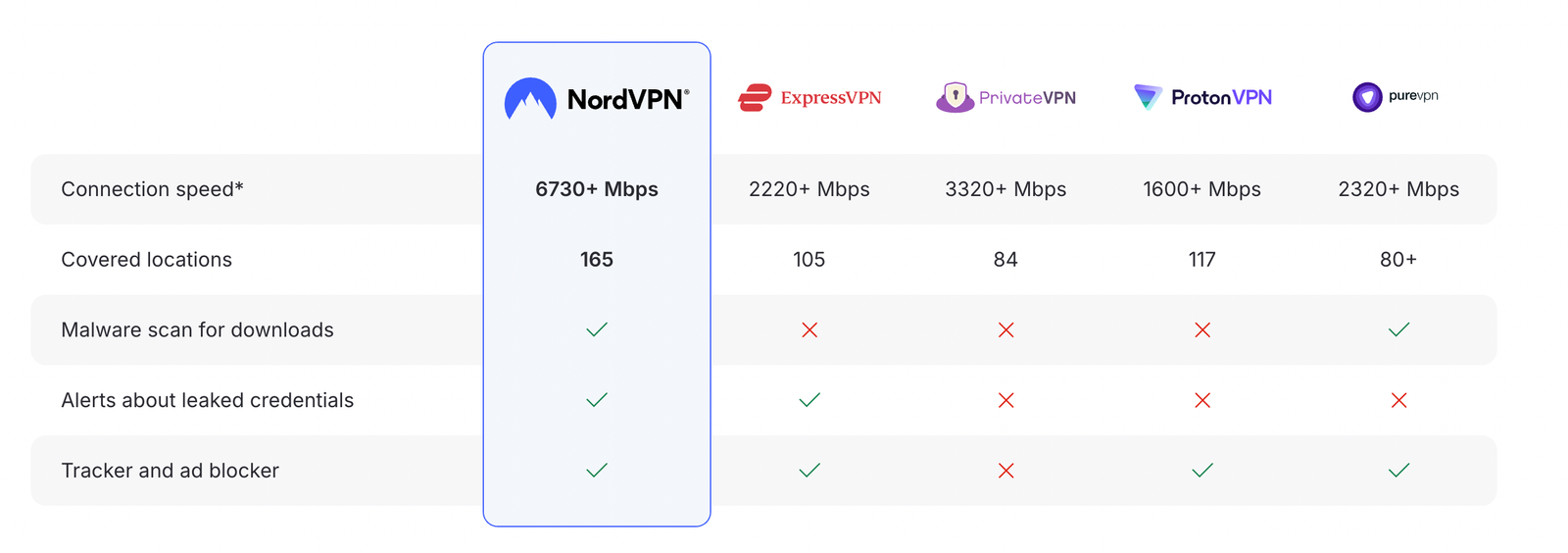
NordVPN stands out as a top solution against online censorship due to its robust features and user-friendly interface. It offers military-grade encryption and a vast network of servers in over 60 countries, ensuring reliable access to blocked content. This provider excels in speed and security, making it ideal for streaming, browsing, and secure communications. NordVPN’s no-logs policy protects your privacy, even from potential threats. For anyone facing censorship, whether travelers or activists, NordVPN delivers consistent performance. Moreover, its double VPN feature adds an extra layer of protection. However, what truly sets it apart is the ease of use on all devices. It is a good choice because of these comprehensive tools that enhance online freedom. Sign up for NordVPN today to reclaim your internet rights and enjoy secure browsing—your defense against censorship starts now.
How NordVPN compares to other top VPNs
Disclosure: We earn a commission at no extra cost to you if you make a purchase through links here. This helps support us in creating more content for you. Thank you for your support!
Share With Friends