
Virtual Private Networks Secure E-Government Services
In today’s digital world, virtual private networks play a crucial role in protecting e-government services. Governments rely on online platforms for services like tax filing and citizen registration. These platforms handle sensitive data that hackers often target. A VPN creates a secure tunnel for data transmission. This encryption keeps information safe from interception. Many users overlook the risks of public Wi-Fi networks. E-government services must prioritize user privacy and data integrity. VPNs address these concerns by masking IP addresses. They also prevent unauthorized access to government databases. As cyber threats evolve, adopting VPNs becomes essential for public sector operations. This technology ensures secure communication between users and servers. Governments worldwide are integrating VPNs into their infrastructure. The result is enhanced trust in digital services. VPNs not only secure data but also maintain compliance with privacy regulations. Users benefit from faster and more reliable connections. Overall, VPNs are vital for modern e-government frameworks. This post explores how VPNs safeguard these services effectively.

Benefits of VPNs for E-Government Security
VPNs offer key advantages for e-government platforms. They encrypt data during transmission over the internet. This protection prevents breaches in public networks. E-government services deal with personal information daily. Hackers target these vulnerabilities for identity theft. A VPN hides user locations effectively. It also blocks surveillance attempts by third parties. Many governments face challenges with data sovereignty. VPNs help maintain control over information flows. For instance, encrypted connections reduce the risk of leaks. This feature supports secure remote access for officials. Users experience peace of mind when submitting forms online. VPNs integrate easily with existing systems. They enhance overall network performance as well. However, implementation requires proper configuration. E-government agencies must train staff on VPN usage. The result is a more resilient digital infrastructure. Additionally, VPNs support multi-factor authentication. This layer adds extra security for logins. In summary, these benefits make VPNs indispensable. Furthermore, cost-effective solutions are available today. E-government services gain from reduced downtime risks. Therefore, investing in VPNs protects national interests. Moreover, regular updates ensure ongoing protection. Governments cannot afford to ignore this technology. It directly impacts public trust and efficiency. Now, consider the role of advanced features in VPNs. They provide options like split tunneling for better control. This allows selective encryption of traffic. Users appreciate the flexibility in different scenarios. However, balancing security with usability is key. E-government platforms must prioritize user-friendly interfaces. Additionally, VPNs help comply with international standards. Therefore, agencies achieve higher compliance levels. Moreover, these tools support scalability for growing demands. In practice, VPNs handle increased traffic during elections. They ensure smooth operations without compromises. Furthermore, real-time monitoring detects potential threats early. This proactive approach minimizes disruptions. Overall, the benefits extend to all stakeholders involved. E-government services become more reliable and secure. However, selecting the right VPN provider is crucial. It influences the effectiveness of these advantages. In conclusion, VPNs transform e-government security landscapes.
Implementation Challenges and Solutions for VPNs
Deploying VPNs in e-government settings involves several hurdles. Initial setup requires technical expertise and resources. Many agencies struggle with compatibility issues. Legacy systems often clash with modern VPN software. This problem delays full integration efforts. Training employees on VPN usage is another challenge. Users may resist changes to their routines. However, proper education can overcome these barriers. Solutions include phased rollouts for smoother transitions. Governments can start with pilot programs in select departments. This strategy tests VPN effectiveness before wider adoption. Additionally, choosing user-friendly VPN interfaces helps. They reduce the learning curve for staff. Monitoring and maintenance are critical as well. VPN networks need regular audits to detect weaknesses. Automated tools can simplify this process. For example, real-time alerts notify admins of issues. Furthermore, scalability ensures VPNs handle growing demands. E-government services expand with population needs. Therefore, flexible VPN solutions are essential. Moreover, addressing cost concerns is vital. Budget limitations often hinder implementation. Cloud-based VPN options provide affordable alternatives. They eliminate the need for physical hardware. In addition, partnerships with VPN providers offer support. This collaboration accelerates deployment timelines. However, data privacy regulations add complexity. Compliance with laws like GDPR is mandatory. VPNs must encrypt data to meet these standards. Solutions involve selecting providers that prioritize privacy. Regular updates keep systems aligned with regulations. Furthermore, integrating VPNs with firewalls enhances security. This combination blocks unauthorized access attempts. Overall, these challenges are manageable with planning. E-government agencies benefit from tailored solutions. Therefore, investing in expert consultation is worthwhile. Moreover, successful implementations lead to long-term savings. They reduce the risks of costly data breaches. In practice, VPNs improve operational efficiency too. Users access services securely from anywhere. However, ongoing evaluation ensures optimal performance. This step maintains the integrity of e-government platforms. Additionally, user feedback drives continuous improvements. Governments can refine VPN policies based on input. Furthermore, emerging technologies like AI enhance VPN capabilities. They provide advanced threat detection features. In summary, overcoming implementation challenges strengthens e-government security.

Why NordVPN Stands Out as the Top Option
NordVPN is an excellent choice for securing e-government services. It offers robust encryption and a vast server network. These features ensure reliable protection for users. E-government platforms require high-speed connections. NordVPN delivers without compromising security. However, its no-logs policy is a major advantage. This commitment protects user privacy from scrutiny. Governments can trust NordVPN for compliance needs. Additionally, the kill switch feature prevents data leaks. It automatically cuts connections if the VPN drops. Furthermore, NordVPN supports multiple devices seamlessly. This flexibility suits diverse e-government environments. Users appreciate the intuitive apps for easy setup. Moreover, its affordability makes it accessible. E-government agencies often have budget constraints. NordVPN balances cost with premium features. Therefore, it outperforms many competitors. In addition, dedicated IP options enhance accessibility. They allow secure access to restricted services. However, the double VPN feature adds extra layers. This routes traffic through two servers for anonymity. Overall, NordVPN’s comprehensive tools make it ideal. It relates directly to e-government security needs. For instance, strong protocols like WireGuard ensure speed. This technology keeps connections stable and encrypted. Furthermore, 24/7 customer support assists with issues. Governments value this reliability in operations. Therefore, choosing NordVPN boosts overall protection. Sign up for NordVPN today to safeguard your e-government activities. Protect sensitive data from threats immediately. Experience top-tier security with ease. Do not wait for a breach to act. Start enhancing your online safety now. NordVPN is the smart choice for everyone. Secure your services and gain peace of mind. Take this step to strengthen digital defenses. Join millions of users worldwide right away. Act fast and elevate your e-government security.
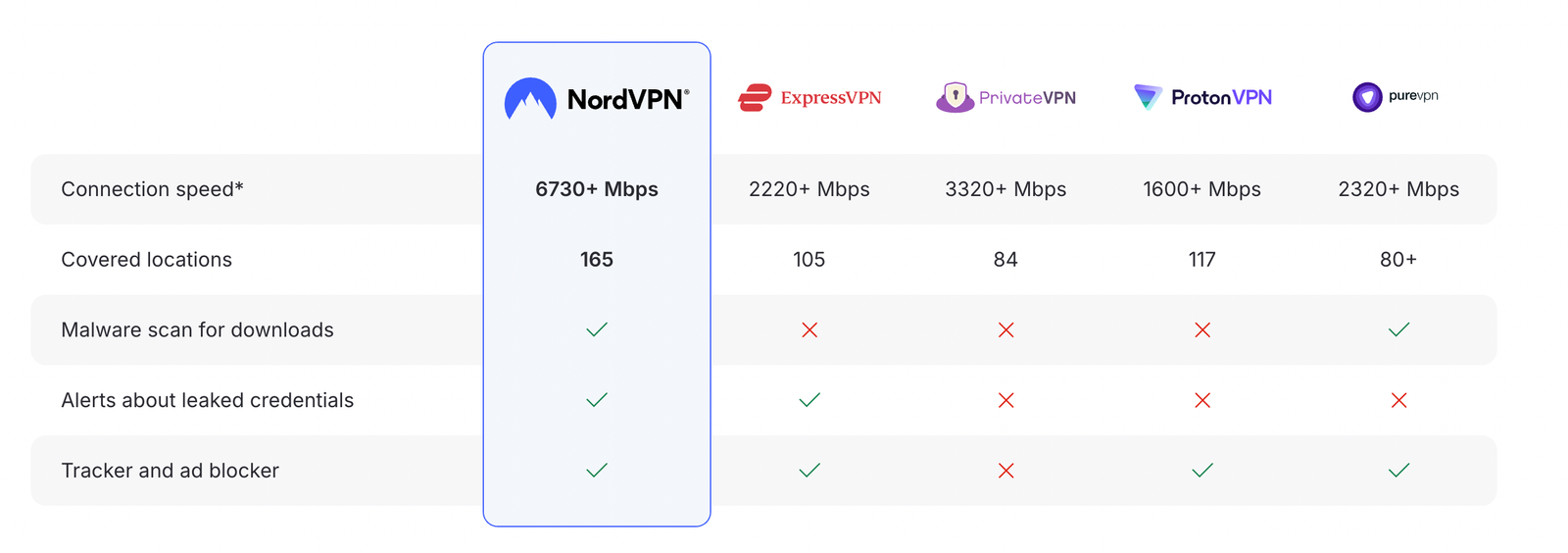
How NordVPN compares to other top VPNs
Disclosure: We earn a commission at no extra cost to you if you make a purchase through links here. This helps support us in creating more content for you. Thank you for your support!
Share With Friends